

Compact sandboxes
And handwriting a zine

This article contains affiliate links and is sponsored by Eli Herman.If you look around for recommendations of ‘old-school’ adventures to run, you’ll notice a trend: zines that contain a kind of compact sandbox. Why are they so popular? And perhaps importantly, what can we learn from them for prepping our own games from scratch?
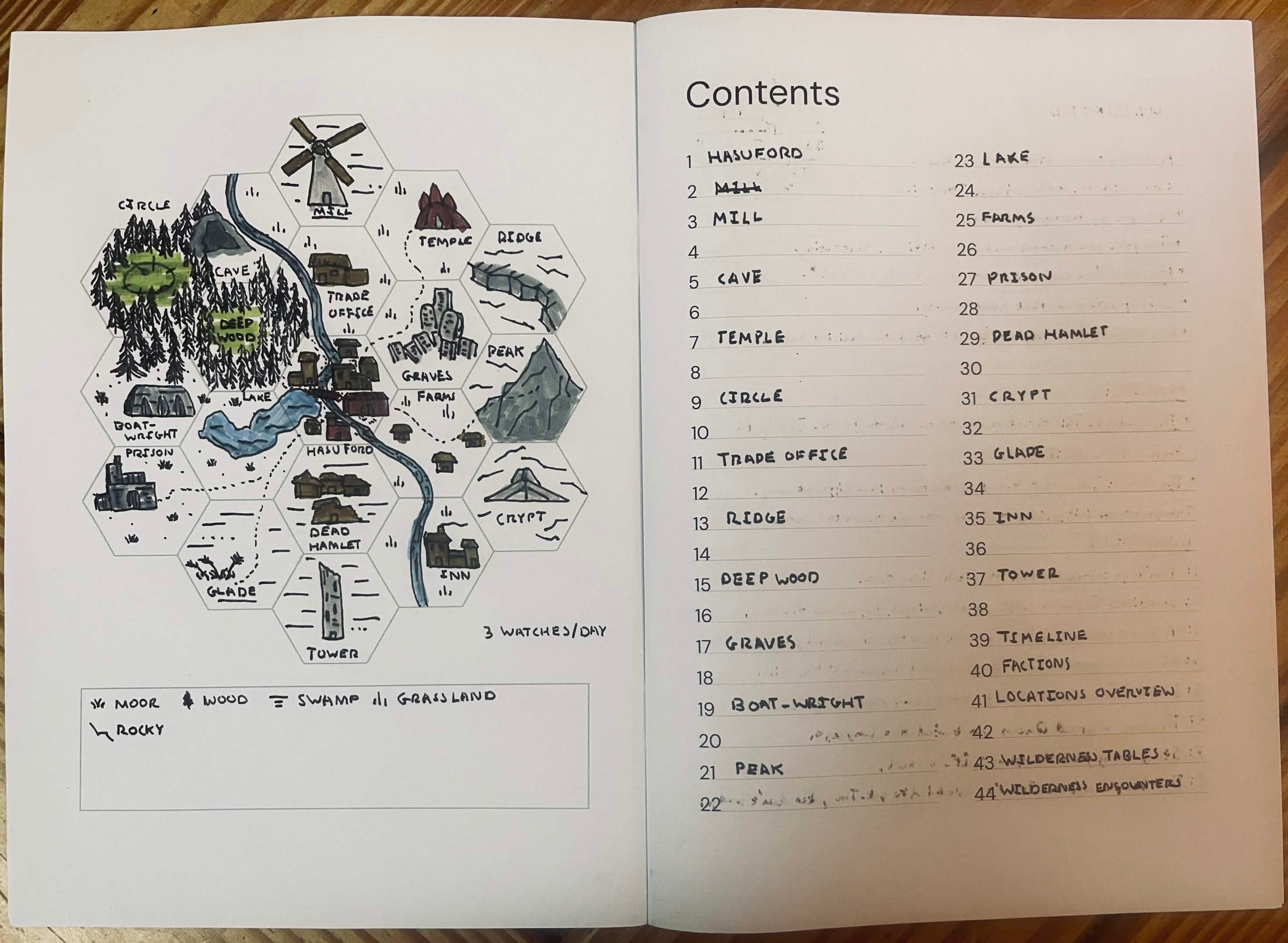
I’ve been thinking about this since when I need to wind down from my main project, I’ve been making a little Cairn sandbox in one of our hexflower zines. It’s been nice to make something by hand instead of on a screen.
What kind of adventures are we talking about?
You might know the kind of thing I’m referring to. Stuff like The Horrendous Hounds of Hendenburgh, Lazy Litch’s Willow, In the Shadow of Tower Silveraxe, and a lot of Joseph R Lewis adventures. They tend to share the following:
A hexcrawl where every hex has at least one feature, or a pointcrawl structure.
A small geographical area with a high density of points of interest.
Around 30-70 pages in length.
Last around 4-10 sessions.
These kinds of modules are super popular right now. Why?
You get to play more than a one-shot but your campaign can wrap up in a reasonable amount of time. 4-10 sessions is a great spot for a lot of folks.
It’s a small space, but it still offers lots of choice.
The dense area means there is always something to do. Players can get straight into the middle of things. People’s time is precious. They don’t want to hexcrawl for 30 minutes of game time waiting for something cool to do.
The space is still big enough that interesting cause and effect can happen. You get that sandbox-y feeling and exploration, but it’s condensed down so it’s more manageable.
These things are pretty easy to read and process. You can read something like Willow in an hour and know how to run it for 4-6 sessions.
The Amethyst Alcove
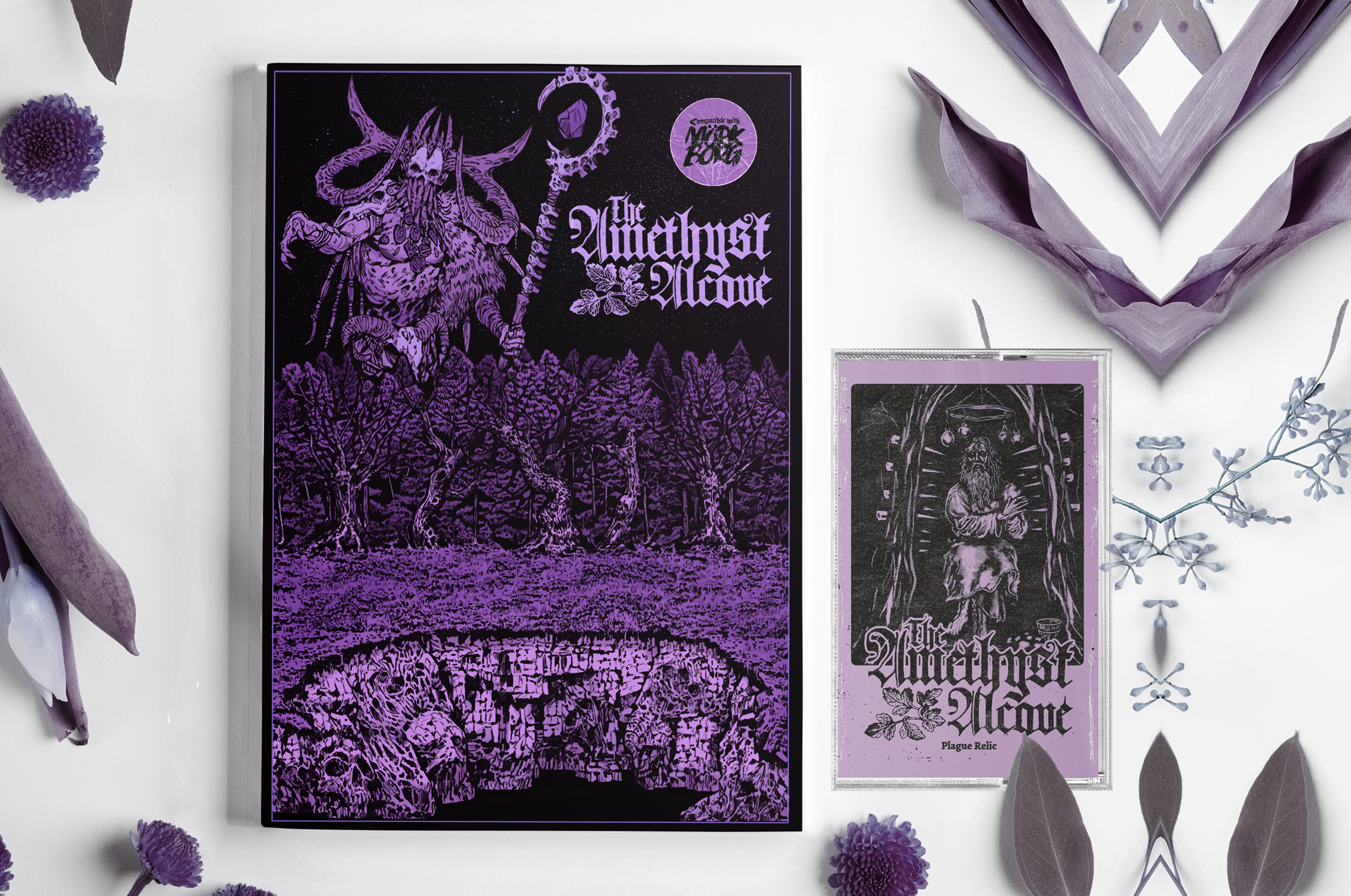
I’ve always felt Mörk Borg needed more overland adventures, and Eli is back to answer the call. His new zine Amethyst Alcove features a dense and freezing hexcrawl with a town to use a base for repeated trips into it.
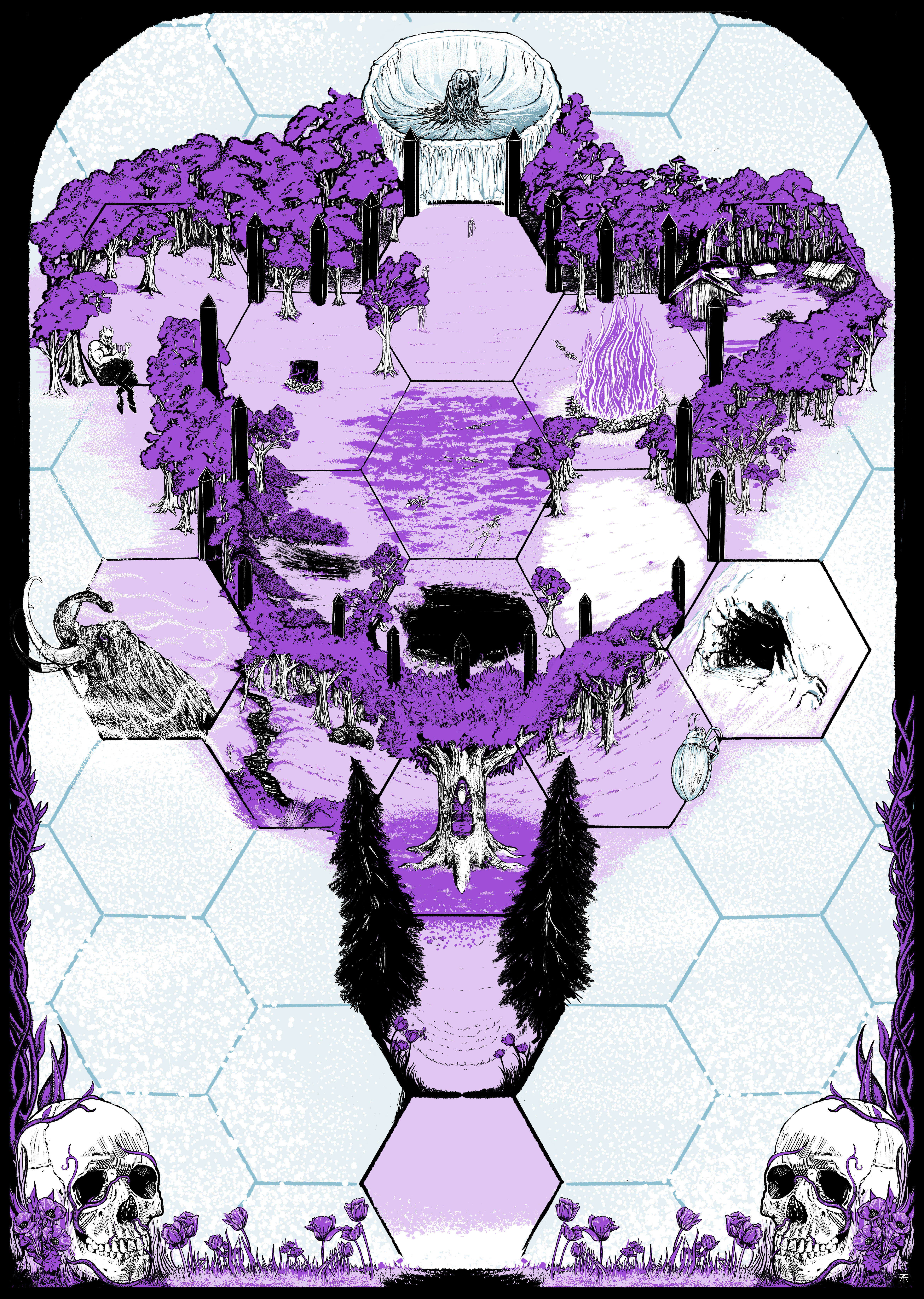
Not to mention that on top of the zine there’s a cassette with an insert by none other than UnitSix. Check out the Kickstarter for more details!
Translating this to our own prep
Something great about this format is that you can prepare a small but dense space ahead of time, and avoid the ‘build as you go’ situation.
For my own little zine, I’m prepping 19 hexes. Each hex has a double spread describing a settlement or small adventure site.
I’ve little doubt it will power 10 sessions of gameplay. I’m spending 30-60 minutes per spread, which is probably a bit much but I’m a stickler. If it’s something I can get done in a month, then it will probably carry me for 3 months of weekly games!
By prepping the whole thing ahead of running it, I’ve been able to build in lots of nice little links between the hexes ~players of mine, avert your eyes~
To enter the temple, you need to have climbed the peak! Plus, the temple has a neat artefact inside that can help with the undead in the crypt. This kind of stuff is better when built before starting, particularly at this smaller scale.
Constraints can be freeing
Folks who know my work will be aware I sit on the more maximalist side of adventure design: long keys, detailed encounters, and specifically engineered sub-systems to reinforce adventure themes.
So I was surprised when (once again) flicking through Mothership’s Warden's Operations Manual that the demo of prepping a location pulled me in.
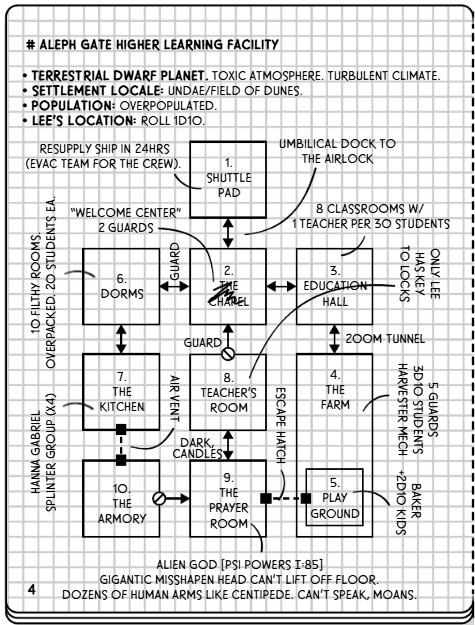
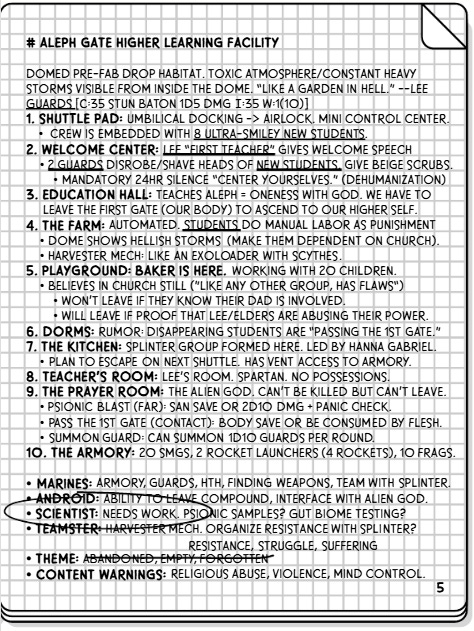
This is pretty minimal! It’s a 10 room adventure site on one spread. And for a home game, I sensed there might something liberating about a lack of pressure to write in detail. I’m still not as terse as Sean McCoy, but I applied this to my hex locations, like this cave:
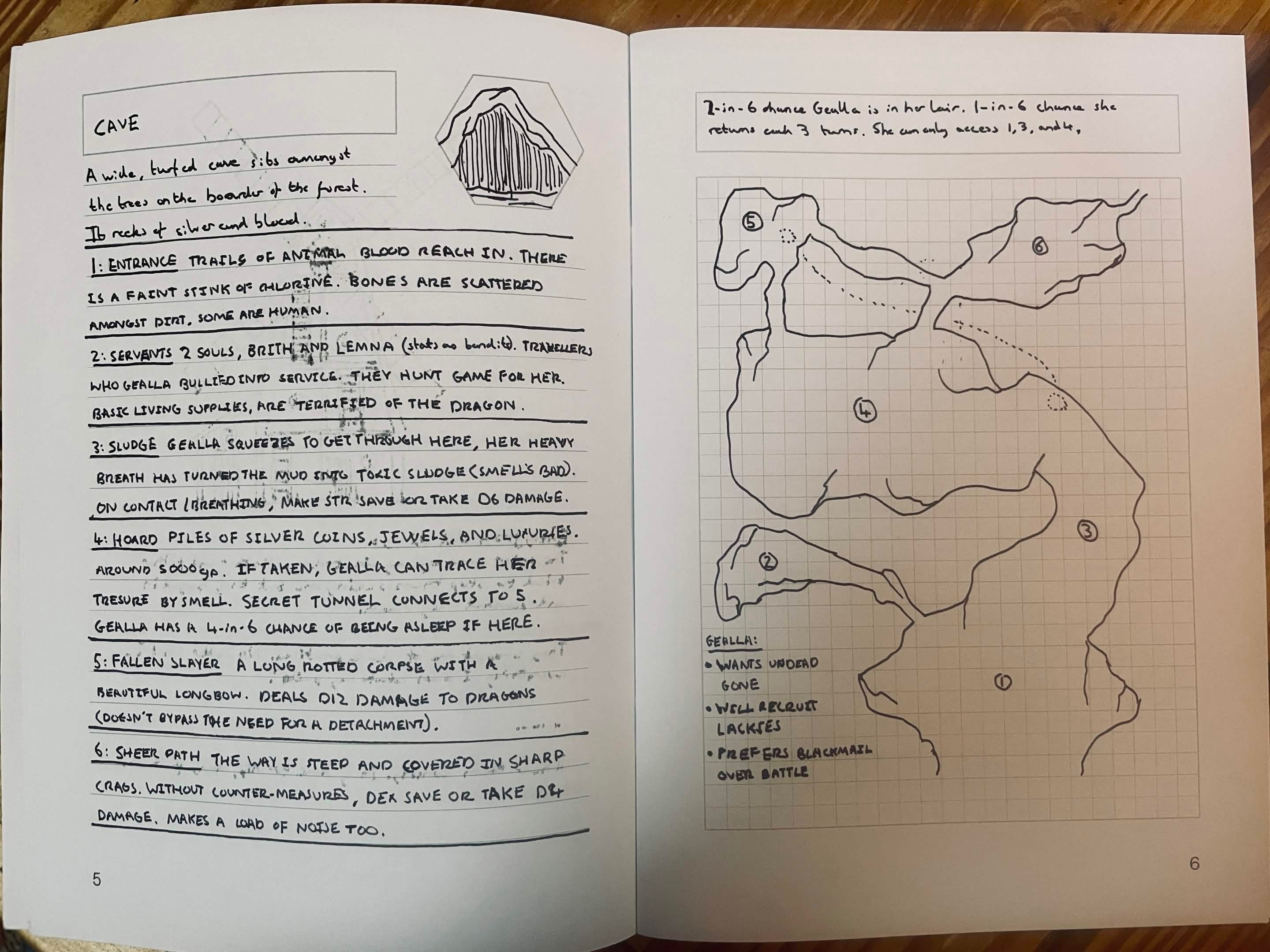
And you know, for something more chill, this has been a great exercise for me. My zine is 46 pages, that’s the space I had to work with. It has meant I have to keep everything manageable, size-wise, and avoid adding stuff I didn’t 100% need.
It’s also meant that I haven’t been stuck in ‘deep level design’ space because I’m not making any ‘real’ dungeons. Obviously you can, and some of these compact sandbox adventures have serious dungeons, but that’s the beauty here: it’s a very customisable format.
Go make a compact sandbox
I think this ‘prep format’ is one we should all be giving a go. Make a small sandbox, in its entirety before play, then enjoy the fireworks of running a dense and connected space with little upkeep required for a small campaign.
Take it from a maximalist designer: no matter your tastes, this is a good thing to do now and again. Bonus points if you do it by hand.
Love love love mini settings! My favorite kind of module/adventure type content
At least for me, these mini settings are the best. Similar to the old school modules, i can admire the creativity and plot hooks with minimal time investment, and then i can proceed to guide through the adventure with modifications and adaptations.