

The only 12 NPCs you need
Lean and gameable NPC templates

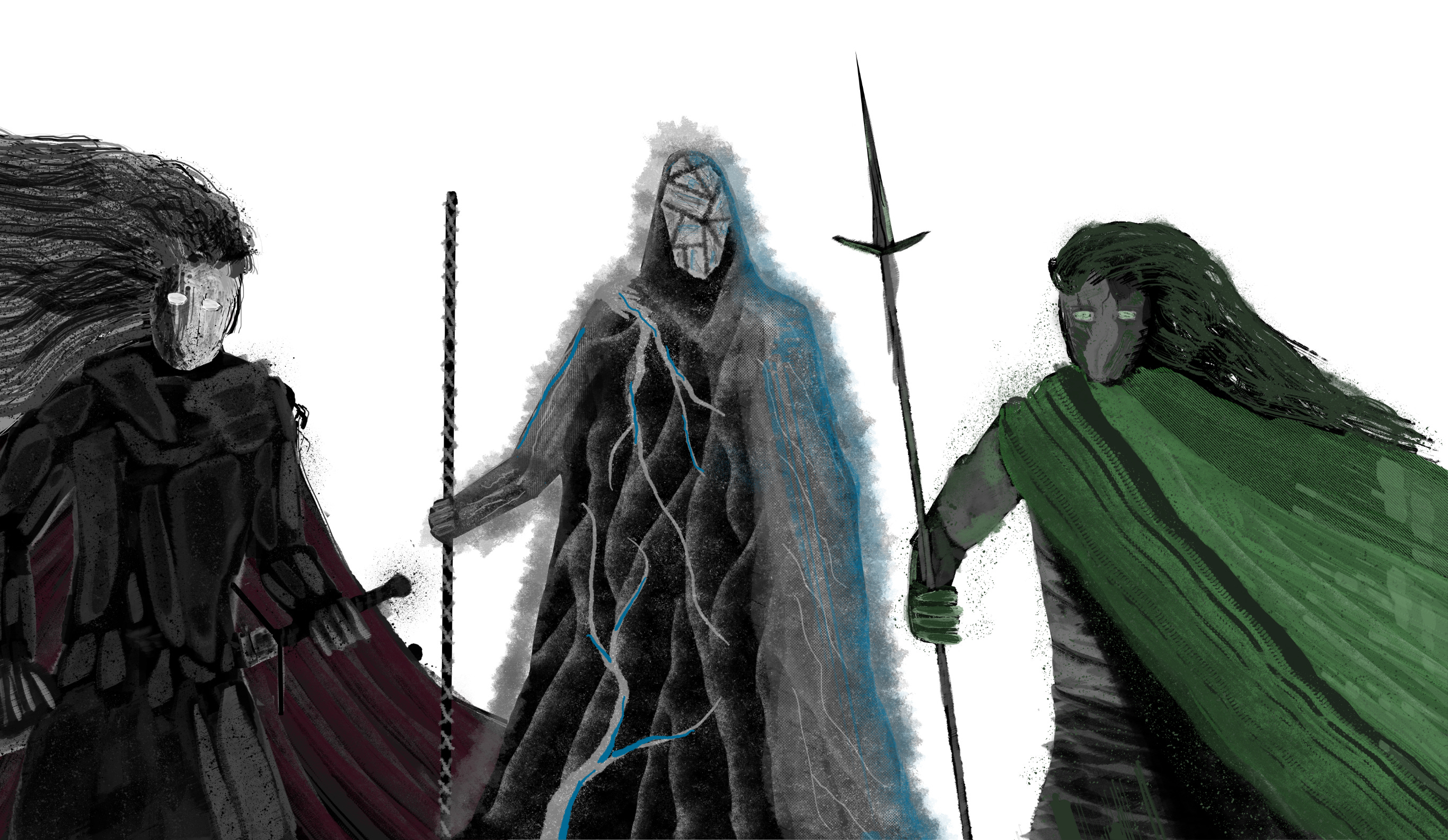
Making good NPCs is essential for a great game. I wanted a lean and effective template for them, focused on making them gameable.
I like Viridian Void’s Minimum Viable Person. My method is inspired by that, as well as Willow, Deep Carbon Observatory, and The House Under the Moon Dial.
Always in threes
NPCs have three gameable properties:
Goals (G). The things they want or need. These can be ongoing goals e.g. getting rich, or things with a more finite timeline e.g. survive the siege.
Leverage (L). What means do they have to reach their goals? This can be skills, tools, resources, owed favours, anything that helps them get stuff done. These also inform what NPCs can provide in terms of services.
Weaknesses (W). What are they susceptible to? This can be anything from a person they care about to an addiction.
For each property, we’re going to determine how many features to include.
Goals
NPCs with less ambition or problems have 1 goal. Ambitious NPCs or NPCs with a lot on their plate have 2 goals. For 2 goals, the goals either conflict with each other or one goal is required to achieve the other.
Leverage
Less effective NPCs have 1 form of leverage, average NPCs have 2, and powerful NPCs have 3.
Weaknesses
Resilient NPCs have 1 weakness, other NPCs have 2 weakness. How obvious or exploitable the weaknesses are also influences their toughness. You might find weaknesses also come up when you make statblocks or gear lists for NPCs.

d12 Archtypes
This gives us 12 rough archetypes of NPCs that we can roll up or pick from like a buffet when we are starting to sketch a cast of characters for an adventure.
1: The Downtrodden (1G, 1L, 2W). Only needs one thing but doesn’t have much leverage and has two weaknesses to rub it in. Pitiful.
2: The Commoner (1G, 1L, 1W). One problem, one thing going for them, one Achilles heel. Perfect for minor NPCs.
3: The Mess (1G, 2L, 2W). Average leverage but more weaknesses, focused on one goal because that’s all they can handle. A semi-effective bundle of chaos.
4: The Controller (1G, 2L, 1W). One goal, one weakness, average leverage. They are going to reach their goal pretty quickly. Effective mid-tier players.
5: The Deadset (1G, 3L, 2W). Only has one problem and lots of leverage to sort it, but an extra flaws that might trip them up. Lots of potential for success and screw ups.
6: The Mastermind (1G, 3L, 1W). They have all the tools, only one weakness, and only need to worry about one thing right now. The scariest NPC.
7: The Talker (2G, 1L, 2W). Has more goals but less leverage, and more weaknesses than usual. Out of their league but pretends otherwise, you know the type.
8: The Mule (2G, 1L, 1W). They have less leverage but also less weaknesses. Give them time and those goals will happen. The pacekeeper who outlasts the competition.
9: The Balance (2G, 2L, 2W). Has average leverage but extra goals, and that ambition comes with an extra flaw. A more interesting Commoner.
10: The Tough (2G, 2L, 1W). Average leverage with bigger ambitions, but have one weakness so they’re more likely to resist interference. Ain’t gonna be stopped.
11: The Underdog (2G, 3L, 2W). Has top tier leverage and ambitions, but an extra weakness keeps them from being the top pick in the race. Their own worst enemy.
12: The Wrecker (2G, 3L, 1W). Has ambition plus a ton of leverage and little weakness. They tend to cause big changes. The Mastermind’s biggest headache.
Adventure design examples

I’ve been using these templates at points whilst designing INKVEIN, my MÖRK BORG megadungeon. Let’s look at some NPCs from the quickstart dungeon (which you get for free when you sign up for launch notifications on the BackerKit page). First up is Sykri, a thief:

We can see Sykri is a ‘Commoner’, she has:
1 goal: to find the stash.
1 form of leverage: she knows the way out.
1 weakness: she’s working alone and has 3 adversaries.
Meanwhile Meneir is a ‘Mule’:

Meneir has:
2 goals: find Caldra, then find Zyraier.
1 form of leverage: he has an Ink sorcery.
1 weakness: He’s lying, and doesn’t seem trustworthy in the first place.
This technique has proven really useful so far, if you want to see more it in action go check out the quickstart guide dungeon. It’s 16 chambers, has caving rules included, and is FREE!
This maps surprisingly well onto secondary characters in fiction. The "Mastermind" and "Wrecker" archetypes especially; one goal, maximum leverage, minimal weakness is exactly what makes antagonists terrifying on the page too. The GLW framework is lean enough to use as a quick character sketch before drafting.
Great lean framework that works great with your faction framework. Awesome stuff.