

How many words should we use?
A pseudo-sensible answer

Ironically, this is a longer MurkMail article.
An eternal question of GM prep and adventure design is ‘how much should I write?’ It’s a tough question, but it does matter.
Really when we say ‘how much should I write’, we aren’t talking about whether to write 10 dungeon rooms or 30 dungeon rooms. We are wondering how much to write for discrete chunks of information: location descriptions, NPCs, interesting artifacts, and so on.
A simple answer might be ‘as much as you need’ - and whilst there is merit to that response - for word-addicted maximalists like myself, an upper limit is helpful because my answer to ‘as much as you need’ might be 2 sides of A4 to describe one magic sword. That’s bad, even for a home game.
A good way to derive this kind of limit is practical considerations, rather than artistic ones.
Reading speed
A meta-study (of 190 different studies) puts the average speed of silent reading in English at 238 words per minute for non-fiction (which I feel is applicable for the mix of fictional and technical information in a location key or NPC description). So this discussion only applies to ttrpg stuff written in English.
The maximum any sensible GM would want to spend reading mid-session is 60 seconds (during which they are probably trying to keep talking as well). So we should keep a chunk of information (an NPC, a location description) small enough to be read in 60 seconds.
The study says we can read 238 words in 60 seconds but let’s round up to a memorable figure: 250 words seems like a solid limit for a piece of discrete information like a location, sub-location, magic item, etc.
It’s important to note that ‘nested’ information doesn’t apply here: if a magic item present in a dungeon room has a description of its own, and that combined with the location description brings the total to 400 words, I don’t think that matters too much since they have a fair amount of separation from each other.
Caveats
There’s some important holes in the boat here, or at least things I can imagine could be holes:
GMs, I would guess, have a higher words-per-minute reading speed on average, compared to the general population. But I think it’s still good to work with a ‘standard reading speed’.
GMs are likely to skim-read during a session, to speed up the rate at which they can deploy the information presented. That’s great, but we should plan for those not skim reading.
Attention span
In an APA interview transcript with Dr Gloria Mark from University of California, Dr Mark mentions that her most recent research (at the time) indicated that the average attention span of someone engaging with a screen is around 40 seconds.
Now given that this is a hobby done for fun, it feels like 60 seconds is ok. But this is further reason to not ask someone to spend more than 60 seconds digesting a chunk of information. If a dungeon room takes 2 minutes to read, you are going to lose quite a few people on the way vs. something that takes 30 seconds.
I think this reinforces 250 words as a good upper limit.
Visual space
Discrete chunks of information need to be viewable in their entirety without scrolling or page flipping. Whilst in physical format and wide digital screens you can view spreads, it’s good to design for the viewing of a single page.
Location keys or NPC entries that cross pages always feel jarring to me, even if I’m viewing a book in spreads.
Note: If you aren’t using a notebook or some digital page style format, and instead use something like a markdown file in Obsidian, instead, consider a ‘page’ to be your view window.
Examples
Let’s look at an offender under these advisories: Call of Cthulhu’s The Haunting.
Whilst plenty of chunks of information are under 250 words, there are a few that greatly exceed it, like Room 3 in the house coming in at around 500 words.
I am aware this includes Keeper advice call-outs, but it is still text that the location key expects you to parse in-game.
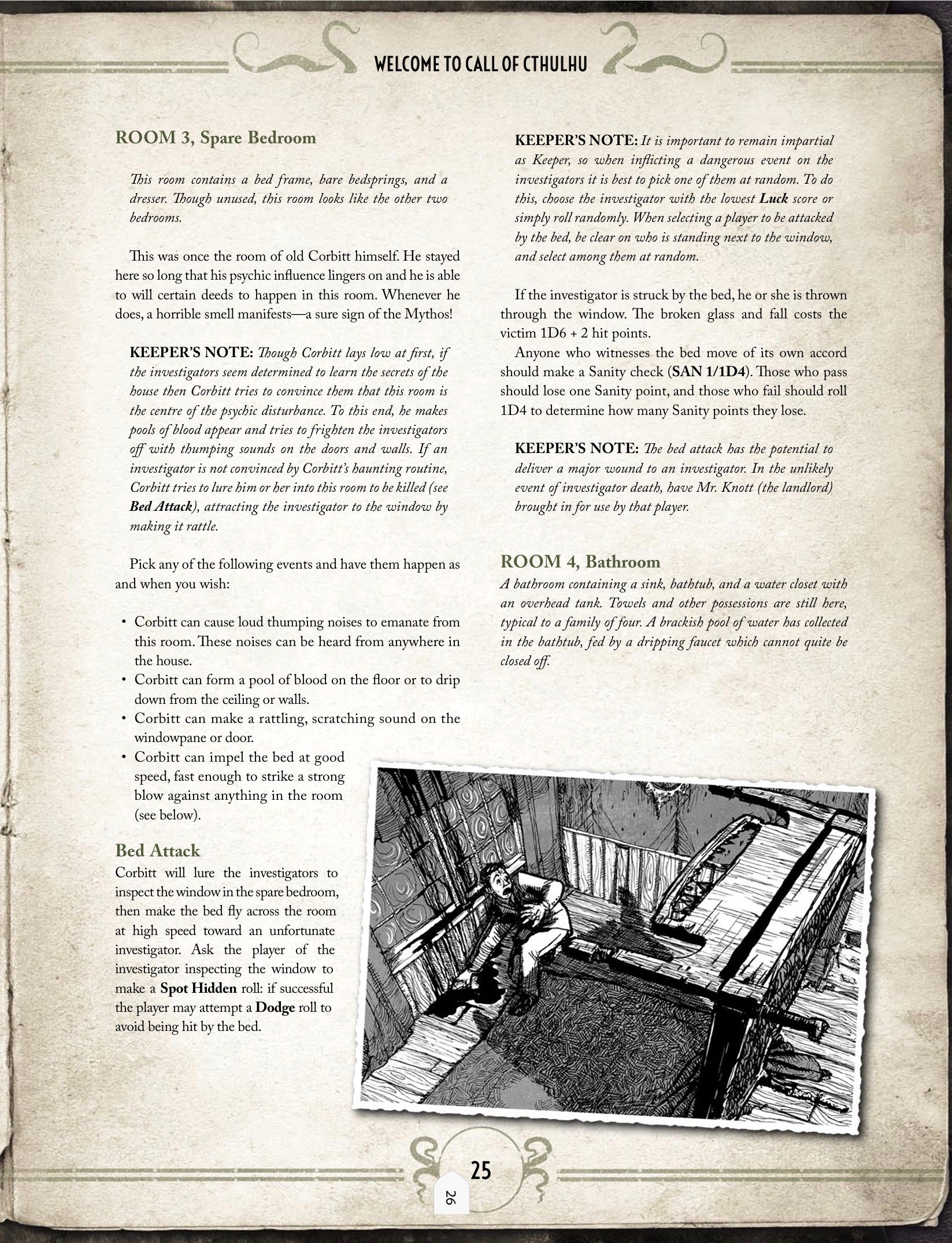
Something I noted as well was that even on an iPad with a great screen, this was hard to read when the whole page was viewed, the text is too small. The Haunting also commits the crime of having a single location description split across pages.
Now I’ve run the Haunting, and I can confirm both of these occurrences are a pain. I don’t necessarily mind entries that exceed 250 words if they really justify using that much text. For me, this doesn’t.
I had a quick look at some bits of official 5e adventures too, and I think it’s fair to say it was common to see location keys exceeding 500 words without good justification.
I think this is something that applies to home game notes too: when I have let chunks of information spill between pages or not be easily viewed as one chunk on a screen, I cause myself problems. Exceeding 250 words without serious reason to has caused me over-writing issues as well.
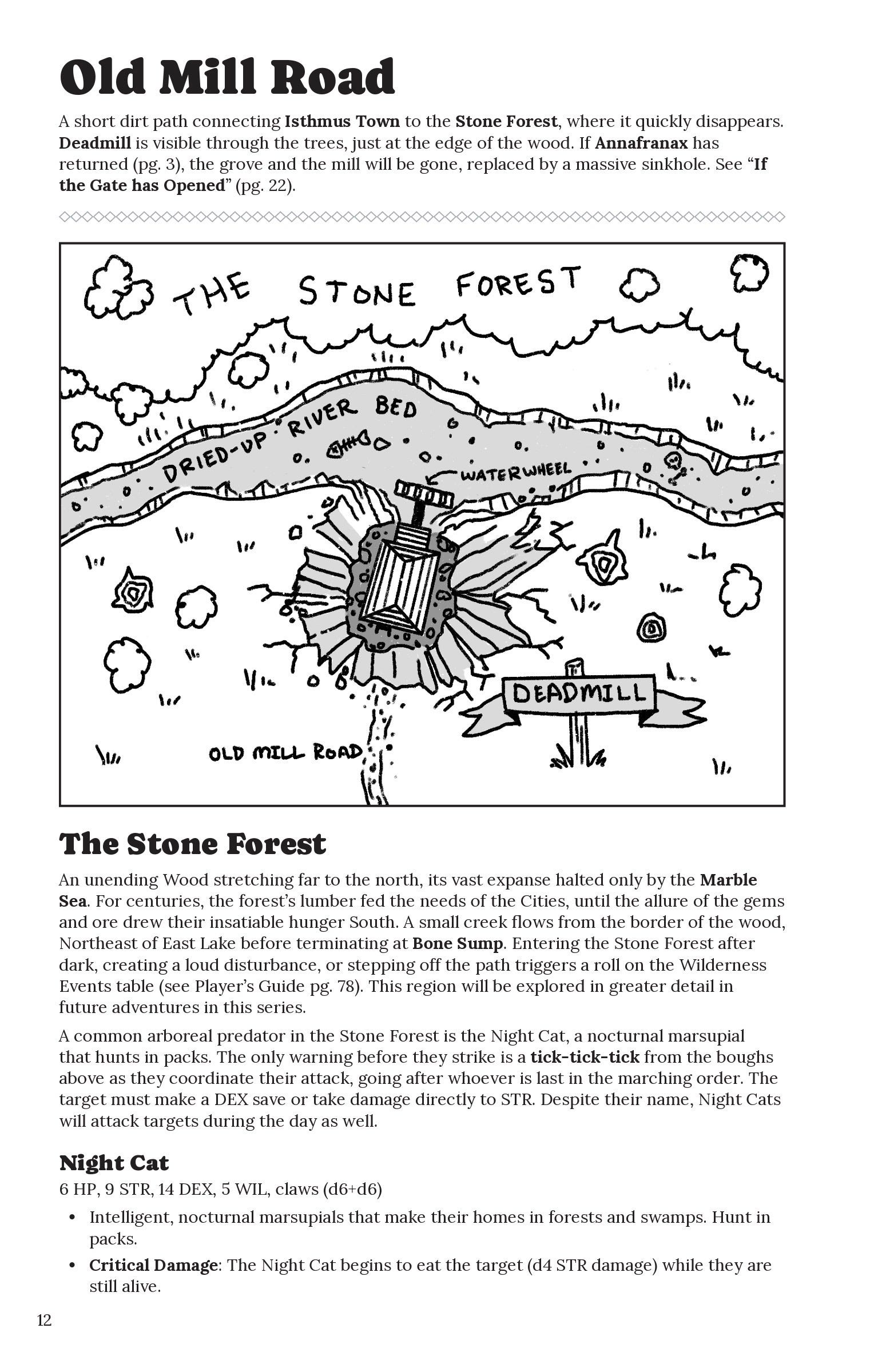
By comparison, Yochai Gal’s Trouble in Twin Lakes keeps entries under 250 words and is much easier to read when viewed as a whole. I’ve just picked one random page but all the pages in CAS-1 are good examples.
Summary
Where possible, keep chunks of information:
Under 250 words
To one page and ensure they are readable when viewed as a whole.
Knowing it takes the average reader of English a minute to read around 250 words is a really good thing to know, because who wants to read for over a minute at the table and keep their players waiting?
Good article. I appreciate how you posed the question and approached an answer logically. As a 25 year HS English teacher, this would get an A.
This is a great article for people getting into designing adventures and such. It really hits home people attention span and speed of reading to give a mindful upper limit of words of 250 words and to keep things to one page. Thank you for sharing.